ServicesPatio Doors
Patio Door Replacement in Frisco
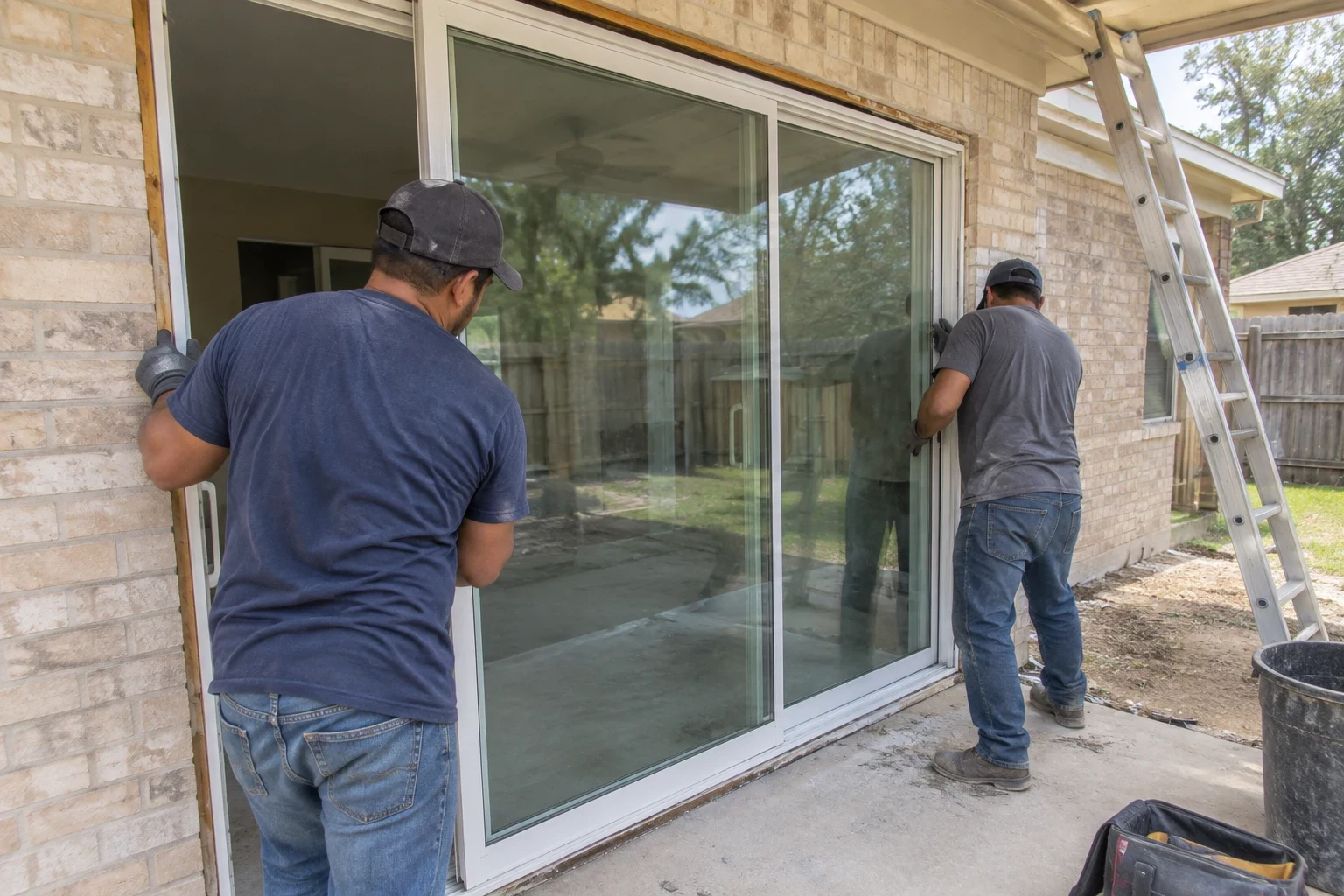
We take out tired sliders and French doors and install tight-sealing units with low-E glass. As the work moves along, we photograph the opening, subfloor and flashing. Before we leave, you can see what sat behind the old frame and how the new door went in.
When a New Patio Door Is the Right Call
Behind every patio door is a big sheet of glass that moves every day. A sliding panel rides on two small rollers in a track. A French door swings on three or four hinges and closes against compression weatherstripping. Once those parts wear, or the frame racks out of square, the door drags, lets air through and stops latching cleanly.
Many back doors around Frisco take hard afternoon sun, and the builder-grade aluminum and early vinyl units in a lot of homes were not built for that heat. Aluminum carries heat right through the frame. In time the seal between the panes gives out and the glass fogs. When the frame or the insulated glass has failed, a new door is usually the honest fix.
We remove the entire unit, inspect the opening beneath it, and set a new door plumb, square and sealed against water. The hidden steps are recorded in pictures, so you are not relying on our word about what sits behind the trim.
What Your Patio Door Replacement Includes
Full tear-out of the old unit
We remove the panels, frame, sill and interior trim rather than slipping a new door inside the old frame. That keeps the full glass size and lets us see the framing.
Opening checked and documented
With the old door out, we photograph the subfloor, sill plate and jack studs. If there is soft wood or water staining, you see it on our screen before anything gets covered.
Drained sill pan, lapped flashing
Water usually gets in at the bottom of the opening rather than through the glass. We set a sill pan that drains to the exterior, then lap flashing tape up the sides and across the head so each layer sheds over the one below.
Setting, shimming and adjusting
The frame is shimmed at the hinge or roller points, checked for plumb and square, and fastened through the shims. We then adjust the rollers or hinges until the panel closes and locks with light pressure.
Low-E glass and frame choices
We walk you through vinyl, fiberglass and clad options and the low-E coatings that cut solar heat on sun-facing walls. You choose with the reasons in front of you.
Trim, sealant and cleanup
New interior casing, exterior sealant at the brick or siding joint, and a vacuumed work area. We haul the old door away.
Signs Your Patio Door Has Reached Its Limit
- The panel scrapes or jumps the track
- Worn rollers on a pitted aluminum track cause a sliding panel to drag and hop. When the track itself has worn into the frame, new rollers rarely hold up for long.
- Haze inside the glass that won't wipe off
- A cloudy layer trapped between the panes shows the edge spacer seal has broken and the argon is gone. Cleaning cannot remove it, and the door keeps out much less heat and cold than it was built to.
- Water on the floor after a storm
- Wind-blown spring rain gets in fast where a sill pan is missing or has failed. Look for baseboards that have swelled, laminate that is lifting or grout near the threshold that has turned dark.
- The lock won't catch
- Over the years, moving clay soil shifts the slab and can twist the door opening. Needing to lift or shove the panel to get it to latch usually means the frame is out of square.
- Hot glass and drafts
- Glass that is hot to the touch in summer, or daylight showing where the panels meet, means heat and air are getting straight through.
How the Job Runs
- 1
Free in-person consultation
We measure the opening, check the existing frame and floor for movement, and note what we see. You get a free quote, by phone or on the spot, itemized by door, glass and labor.
- 2
Confirming specs and ordering
Each patio door is made to the size we measured. Before the order goes in, we go over swing direction, handing, color and glass with you. Once the unit arrives, we call to set an install date.
- 3
Install day
We lay drop cloths from the door to the outside, remove the old unit, and photograph the opening and subfloor. Then the sill pan, flashing and new door go in, and most jobs wrap up the same day.
- 4
Walkthrough and photo record
We operate the door with you, point out the lock and adjustment screws, and go through the images from each stage. You keep a record of what is behind your trim.
What Goes Into the Price
Two things set what a patio door costs: the door you pick and the shape the opening is in after the old unit comes out. Each shows up as a separate line on your quote rather than being folded into one number. To spread payments out, there are 0% Financing options, and $0 Down on the whole project is also available.
- Style and dimensions
- A basic two-panel slider is less expensive than a French door with two working panels or a wide unit with several panels. Taller or wider openings call for sturdier frames and heavier glass.
- Frame choice
- Vinyl costs the least. Fiberglass is pricier but grows less in summer heat and keeps its shape on walls that get a lot of sun.
- Glass options
- Low-E coatings, tempered safety glass and extras such as built-in blinds between the panes each change the price of the unit.
- What sits under the old sill
- A rotted subfloor or sill plate must be replaced before the new door is set. We show you the damage and discuss it with you before any added work.
- Trim and finishing
- Matching the casing you have, painting new trim or reworking tile and flooring at the threshold takes extra time and materials.
Patio Door Questions
- How long does a patio door replacement take?
- Most single patio doors are removed and installed in one day. Rotted framing or tile work at the threshold can add a few hours. Your home is closed up and secure before we leave.
- Should I choose a slider or a French door?
- Sliders keep the floor clear because the panels pass each other inside the frame, which helps in a narrow dining area. French doors open wider and seal more firmly by compression, but you need room for the swing. During the consultation we look at where your furniture sits and the path people walk, then lay out the tradeoffs.
- What happens if you find damage under the old door?
- We stop and walk you through the photos before covering anything. We explain what failed, usually a missing sill pan or old caulk, and what it takes to fix the framing. Nothing extra gets done until you agree to it.
- Will the new door match my windows?
- We can usually match frame color and grid patterns to existing windows. If you are planning window replacement as well, we can quote both so the frames and glass match across the back of the house.
- Will my tile or flooring be damaged?
- We cut the old sill out carefully and protect the floor during the work. Some floors meet the old threshold in a way that needs a new transition strip, and we point that out on the quote so it is not a surprise.
See Your Options for a New Patio Door
We visit, measure the opening and show you what we found at your current door, then hand you a clear, itemized number. While we are there, we are glad to look over your entry door or storm door too.