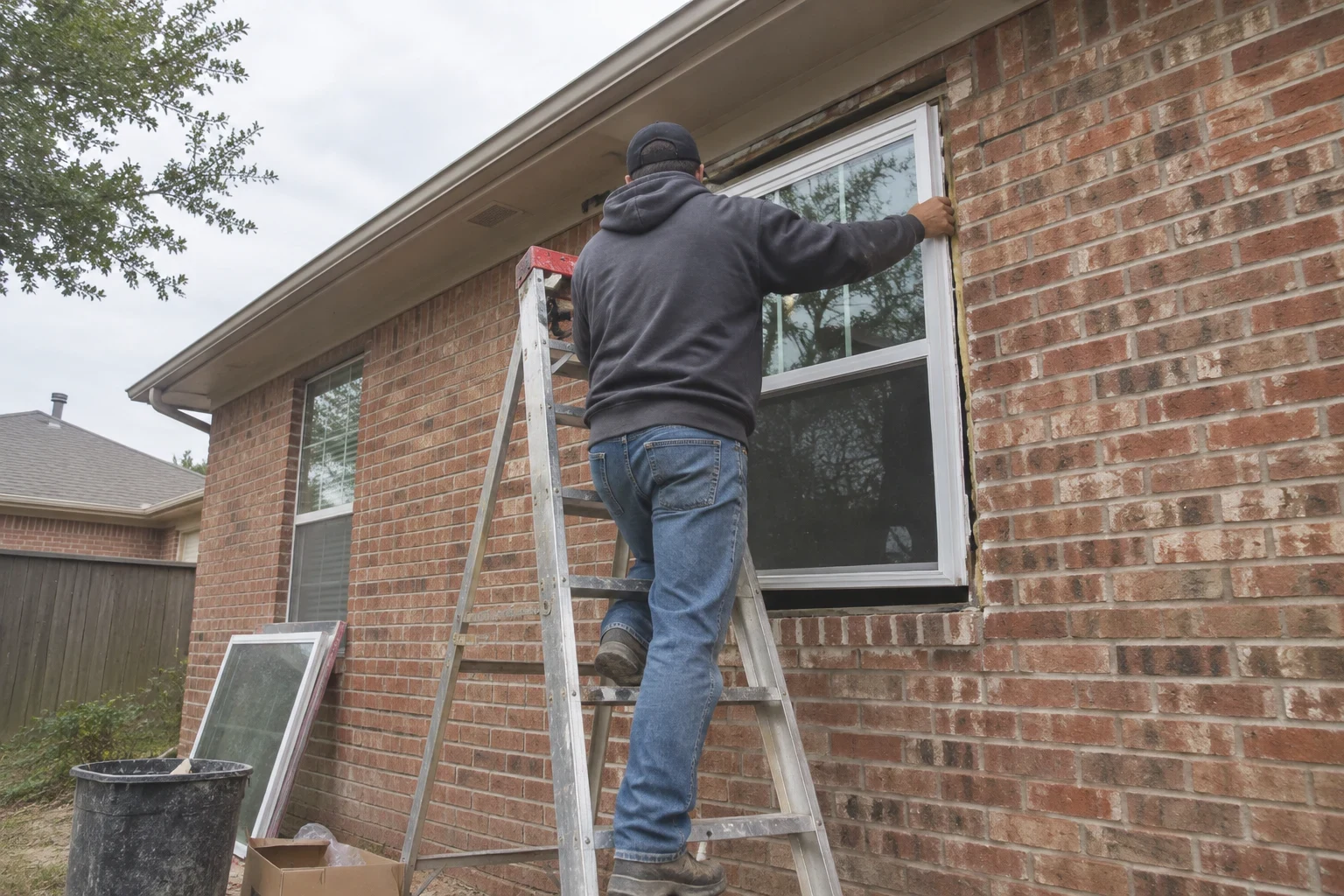
ServicesWindow Replacement
Window Replacement in Frisco
We remove failing windows, check the opening underneath, and install new units sealed against air and water. You see each opening as we found it and as we left it, so you know exactly what you paid for.
When a New Window Makes More Sense Than a Repair
Every window is several parts doing one job: the frame, the sash, the insulated glass unit (IGU), the weatherstripping and the seal where the frame meets your wall. Once the IGU seal breaks, the argon escapes and moisture creeps in between the panes. And if an aluminum frame is carrying summer heat directly indoors, caulk will not fix it. That is when replacing the window helps more than any repair.
Plenty of local homes still have their original builder-grade aluminum or first-generation vinyl windows. Long, hot summers wear both down in the same way: sunlight degrades the vinyl and the seals, and constant expansion and shrinking slowly pulls the joints apart.
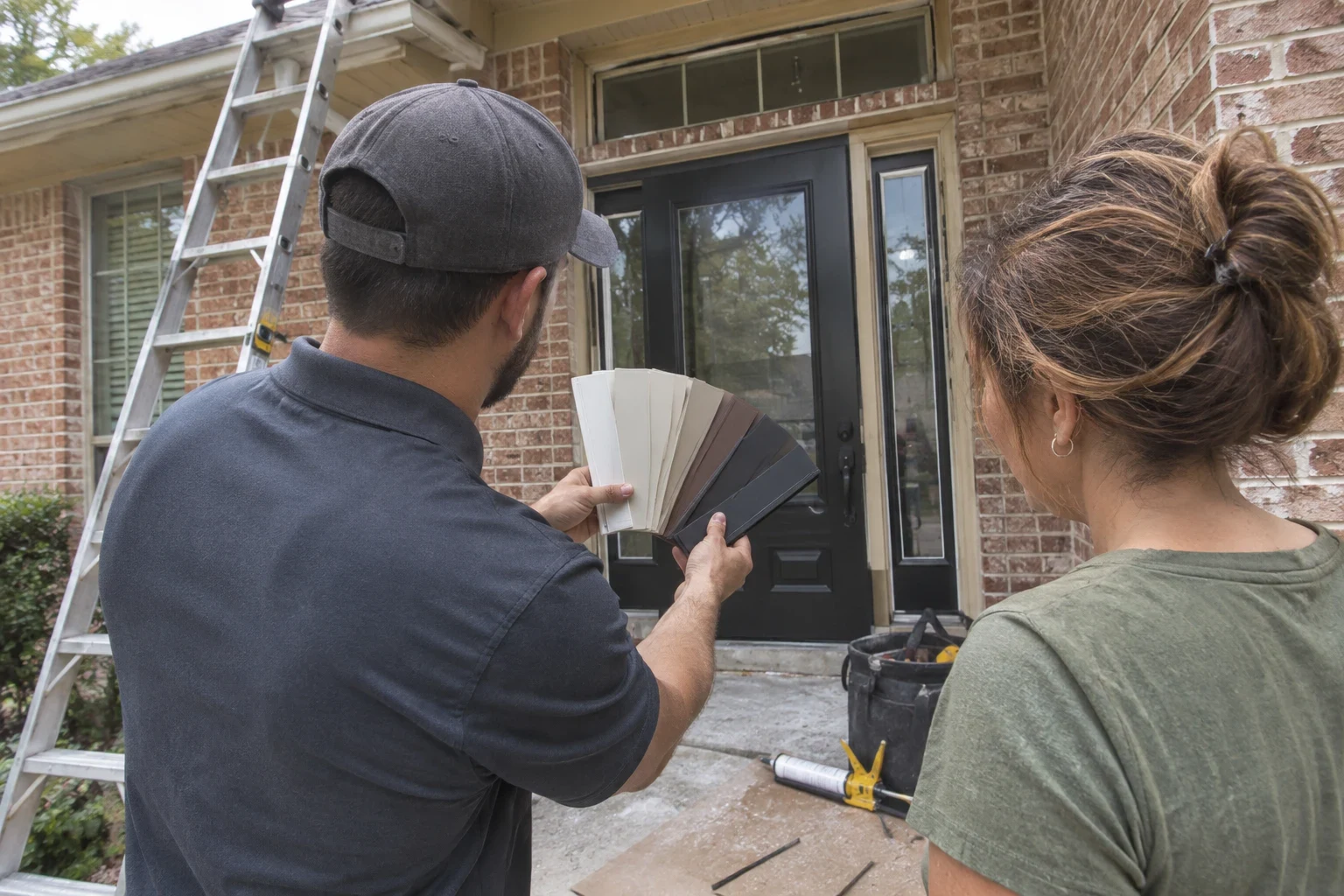
It starts with a free in-person consultation at your house. We measure each opening, look over the sill and the surrounding brick or siding, and write down anything that affects the install. Your written quote then lists every window separately, with its frame material, its glass package and whether it will be an insert or a full-frame unit.
Everything Covered in Your Window Replacement
- 01
Three-point measurements
Each opening is measured for width and height in three places and checked for square. Brick openings often settle unevenly, and a window sized from a single reading can leave gaps too wide for foam to fill.
- 02
Help choosing frames and glass
We go over vinyl versus fiberglass frames, plus Low-E coatings and argon-filled IGUs, and how each one deals with heat on walls facing west and south. That way the choice fits the room instead of a sales sheet.
- 03
Removing the old window with care
Drop cloths go down indoors first. Then we slice through the old sealant, take out the sash and frame or the stops, and guard the interior trim and the brick or siding around the opening.
- 04
Checking what was behind it
With the old unit removed, we take pictures of the sill and rough opening. Any soft wood, missing flashing or past water staining shows up on your phone before the opening is closed.
- 05
Setting and sealing the new unit
We shim the new window level and plumb, fasten it, and fill around it with low-expansion foam that keeps the frame straight. Outside, we use a sealant made to handle the movement and sunlight your wall gets.
- 06
Final cleanup and check
The old windows go with us, the work areas get vacuumed, and we try every sash and lock alongside you.
Questions about Window Replacement?
Call(972) 419-8658Signs Your Windows Need Replacing
Moisture trapped inside the glass
A milky film or beads of water between the two panes tell you the IGU edge seal has let go. The argon has escaped, and no amount of cleaning will bring the glass back.
Hot glass and hot rooms
If a window is warm to the touch on a summer afternoon, it is passing heat into the room. Older clear glass and aluminum frames are the usual cause.
Sashes that stick or drop
Worn balances let a single-hung sash slide down, and warped frames make sashes bind. Both point to a window near the end of its service life.
Drafts and light at the edges
Daylight around a closed sash means the weatherstripping or the frame has shrunk away from the seal.
Water stains below the sill
Staining on the drywall or a soft sill often means water is getting past the window. We check the opening closely once the old unit is out.
How the Job Runs
- 1
Free in-person consultation
We measure, inspect each window and record what we see. You get a written quote by window, with the frame, glass and install method spelled out.
- 2
Ordering
Your windows are built to the measured sizes. Before the order is placed, we go over grid style, color and which openings call for tempered safety glass under code, for example a window beside an exterior door or above a bathtub.
- 3
Install day
The crew pulls a single old unit, checks and photographs that opening, then sets, insulates and seals the new window before moving to the next. That sequence keeps only one hole in your wall at any moment. Most homes are done in one to two days.
- 4
Walkthrough and before-and-after record
We operate every window with you and go through the before and after views of each opening. You keep the photo set for your records.
What Goes Into Your Window Price
Each window is priced on its own, so you can tell what every part of the total pays for. The biggest drivers are how many windows you have, how large they are, the materials you pick and the condition of each opening. We offer $0 Down on the whole project and 0% Financing options to help with the budget, and we walk you through both at the consultation.
- Size, number and type of window
- Arches, picture windows, oversized openings and other custom shapes take more to build and to move into place. Single-hung units and sliders tend to be the most straightforward.
- Frames and glass packages
- Fiberglass is priced above vinyl, but it shifts less as temperatures rise and fall. Better Low-E coatings, a third pane or tempered glass add to what each unit costs.
- Insert versus full-frame
- An insert sits within the frame you already have, so your trim stays put. Full-frame work strips the opening back to the rough framing. It takes more labor, and it is the better choice when the existing frame is damaged.
- Shape each opening is in
- A rotted sill or missing flashing must be fixed before a new window can go in. You see what we found before any of those repairs begin.
- Reaching the window
- Upstairs windows and ones tucked behind shrubs or plantings need more setup time.
Window Replacement Questions
Should I get insert or full-frame windows?
If the existing frame is square, solid and dry, an insert keeps your interior trim and exterior brick untouched and costs less. If the frame is warped, soft or has leaked, full-frame replacement lets us fix the opening and flash it properly. We recommend one or the other at the consultation and show you what we saw that points that way.
Which glass works best for strong Texas sun?
A Low-E coating tuned to block solar heat does most of the work on sun-facing walls. Argon fill between the panes adds insulation. We look at which way each window faces and suggest a glass package for each, rather than one choice for the whole house.
Will you damage my brick, siding or drywall?
Insert installs usually leave both untouched. With full-frame work we cut carefully at the trim line and protect the surfaces around the opening. Anything we disturb gets sealed or trimmed before we leave, and you will see it in the before-and-after record.
What happens if you find damage behind a window?
We stop, document it and show you before we do anything beyond the quoted work. You decide how to proceed with the full picture in front of you.
Do I need to be home during installation?
Plan on having an adult at home when the crew arrives so we can confirm which windows go first, and again when we finish so you can try each one. Between those points many homeowners go about their day, and we keep each room open for the shortest time possible.
See What Your Windows Need
We will measure and inspect each window and give you a written quote. We handle entry doors, patio doors and storm doors too, if you want those looked at during the same visit.